Chapter 1
The one who control him
Ongoing
Time did not so much pass as accumulate.
Two years after the night with Yuna, Hyeok stood at the edge of twenty-one with a body that had finished most of its growing and a mind that had learned to keep certain doors closed. University continued. He took the required courses, ran the same river path until the heat in his lungs replaced the heat that sometimes rose without warning, and called his mother on the same schedule. The careful architecture of his days remained intact. Only the foundation under it had shifted in ways he refused to examine too closely.
Then the call came.
It was an afternoon in late autumn. Hyeok was leaving the library when his phone vibrated with a number he had memorized years earlier but rarely saw. He stopped beneath the covered walkway, rain ticking against the plastic roof above him, and answered.
“Hyeok.”
His father’s voice was the same as it had always been—measured, slightly distant, as if the words were being spoken from the far side of a thick pane of glass.
“Yes.”
“There is a dinner this Saturday. At the house in Pyeongchang-dong. You will come.”
Not a question. Not an invitation. A statement of fact already decided.
Hyeok watched a leaf spin down into a puddle near his shoe. “Does she know?”
A short silence. Then: “Irene is aware. The children will be present as well. It is time.”
The words settled into him with the weight of something long postponed. He felt the familiar tightening under his ribs—the same sensation he used to feel at the school gate when other fathers arrived and his did not.
“All right,” he said.
“A car will collect you at six. Wear something appropriate.”
The line went dead.
Hyeok stood for another full minute beneath the walkway, phone still in his hand, rain continuing its thin, persistent sound overhead. Appropriate. He owned two shirts that might qualify. He owned one jacket that did not look like it belonged to a student who still counted the cost of every meal. He would have to manage with those.
When he called his mother that evening, he told her only that he would be busy on Saturday. He did not say where. He did not say with whom. Jihyo was silent for a longer stretch than usual before she answered.
“Be careful with your face,” she said quietly. “Do not let them see more than they need to.”
He understood what she meant. He always had.
Saturday arrived with a sky the color of wet concrete.
The car that came for him was black, expensive, and driven by a man who did not offer his name. Hyeok sat in the back seat and watched the familiar edges of his district give way to wider roads, then to the tree-lined streets of Pyeongchang-dong where the houses sat further apart and the gates were higher. The silence inside the vehicle was complete except for the soft tick of the turn signal.
When the car finally slowed, it was in front of a stone wall that looked as if it had been built to outlast the people who lived behind it. The gate opened without the driver needing to speak. They passed through into a courtyard of pale gravel and carefully pruned pines. The house itself rose in clean, modern lines—glass and dark wood, the kind of architecture that announced money without raising its voice.
Hyeok stepped out. The air smelled of rain and cold stone.
A woman in a dark uniform was already waiting at the entrance. She bowed and led him inside without unnecessary words. The foyer was wide and quiet. Light fell from a high window onto a floor polished to a soft sheen. Somewhere deeper in the house, muted voices moved like water behind a closed door.
He was shown into a sitting room that looked out onto a private garden. The furniture was low and expensive, arranged with the kind of precision that left no room for accident. Hyeok remained standing. He did not trust the chairs to feel like anything other than borrowed space.
Footsteps approached from the hallway—measured, unhurried.
Irene entered first.
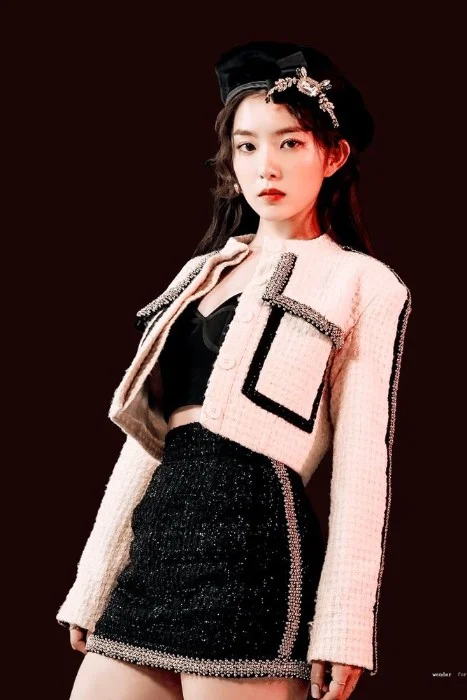
She was not what he had expected, and at the same time she was exactly what the years of absence had prepared him for. Not that tall, but carried with the rigid grace of someone who had never been required to yield space. Her hair was black and smooth, drawn back from a face of sharp, elegant planes. She wore a cream blouse and dark trousers that made no attempt to soften her. When her eyes found him, they did not widen or narrow. They simply assessed, the way a person might assess a crack in a foundation—calculating whether it was structural or merely cosmetic.
Behind her came two young men and a younger woman. The eldest son carried himself with the easy entitlement of someone who had never doubted his place. The second son watched more carefully. The daughter looked at Hyeok with open, almost clinical curiosity.
Kang Jae-won entered last.
He looked older than the last time Hyeok had seen him, the lines at the corners of his eyes deeper, but the same controlled distance remained in his posture. He nodded once, as if confirming that an expected object had arrived on schedule.
“This is Hyeok,” he said.
The introduction was unnecessary. Everyone in the room already knew who he was. The statement served only to formalize the moment, to place it on the record.
Irene’s gaze traveled over Hyeok slowly—his height, the breadth of his shoulders under the inexpensive jacket, the way he stood with his weight evenly distributed, ready to move if required. When she finally spoke, her voice was cool and precise, each syllable clipped clean.
“So you are the one.”
Not a question. A confirmation of something she had already decided.
Hyeok met her eyes. The instinct to lower his gaze rose and was pushed down. “Yes.”
A faint, almost invisible shift moved through her expression—something between distaste and calculation. She turned slightly toward her husband without taking her eyes off Hyeok.
“He looks like you,” she said. “Around the mouth. And the hands.”
Jae-won did not respond to the observation. He gestured toward the seating. “Sit.”
They sat.
The conversation that followed was a careful performance of civility. Irene asked about his studies in a tone that suggested she already knew the answers and found them insufficient. The eldest legitimate son—Min-jae—offered a few remarks about the weather and the traffic, his smile never reaching his eyes. The daughter watched Hyeok with the focused attention of someone cataloguing weaknesses. Jae-won spoke little, intervening only when the silence threatened to become too honest.
Hyeok answered when spoken to. He kept his sentences short. He did not reach for the tea that had been poured for him until Irene had lifted her own cup. Every movement felt measured against an invisible standard he was already failing.
At one point Min-jae leaned back in his chair and asked, with the casualness of someone testing a blade, “Do you intend to join the company after graduation? Or is that still undecided?”
The question carried layers. It was not about employment. It was about claim.
Hyeok looked at him directly. “I haven’t decided.”
“No?” Min-jae’s smile thinned. “Most people in your position would have decided already.”
“I’m not most people.”
Irene’s cup made a soft, deliberate sound as she set it back in its saucer. The room seemed to tighten around the noise.
“Clearly,” she said.
9 likes from kryphtot, Nariko, Sykeeeeee8, DCH, kindtyranny, Xiefs, PinkBlood, nekkonii, and rai_.