Six weeks later, the quiet intimacy of their shared journey has gently transformed Aespa—leaving them softer, more open, and quietly bound by the healing warmth they found in his care.
Six weeks had passed like a fever dream—or perhaps like the slow, steady thaw after a long, bitter winter. The dormitory had transformed from a fortress of secrets into something far stranger and far more precious: a home without walls. The extraordinary had become ordinary. The scandalous had become routine. Ningning called him “Daddy” at breakfast, and no one blinked. Giselle wandered into Karina’s room at midnight as if it were her own, and no one whispered. Winter sketched by the window with a peace in her eyes that had not been there before. And Karina, the leader, the protector, the architect of their strange, delicate ecosystem, had finally, truly, learned to let someone else carry the weight.
Julian stood at the window of the dormitory on the morning of the CEO meeting, a cup of coffee cooling in his hands, and watched the sun rise over Seoul. Behind him, the soft sounds of the dorm stirring—Ningning’s sleepy murmur, Giselle’s raspy morning laugh, Winter’s quiet footsteps, Karina’s calm, commanding voice as she reviewed the schedule. Six weeks ago, he had stood in this same spot, terrified of what would happen when the secret shattered. Now, the secret was gone, and instead of destruction, there was… this.
He thought of them as they had been, six weeks ago. He thought of them as they were now.
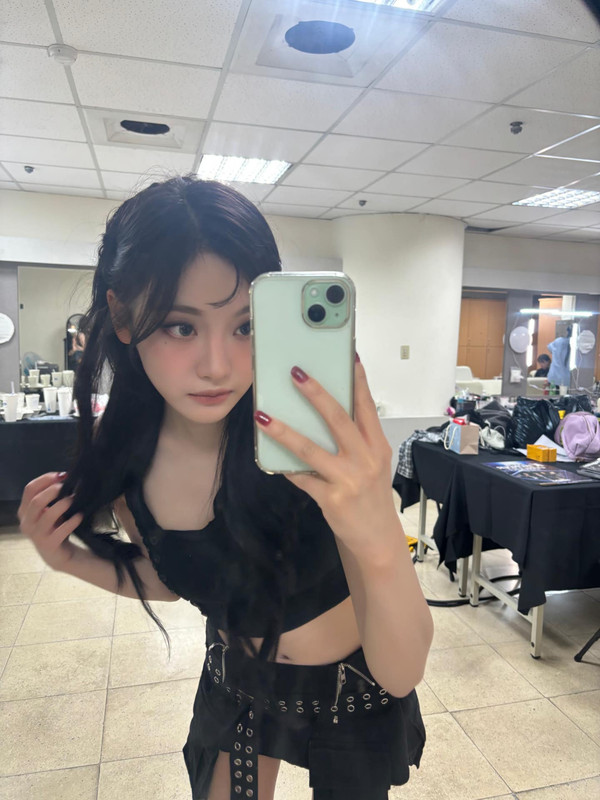
Ningning. Six weeks ago, she had been a fragile, trembling thing—desperate for approval, terrified of failure, her voice a beautiful instrument paralyzed by the fear of being imperfect. She had called him “Daddy” in a whisper, a secret, a shameful confession. Now, she said it openly, brightly, with a confidence that made the word sound like a declaration of self-worth rather than a plea. Her voice, in the studio, had found new colors—warmth where there had been brittleness, power where there had been fear. She no longer flinched at her own reflection. She no longer crumbled at a single mistake. She had learned that she was enough, exactly as she was. And watching her bloom had been like watching a flower turn toward the sun.
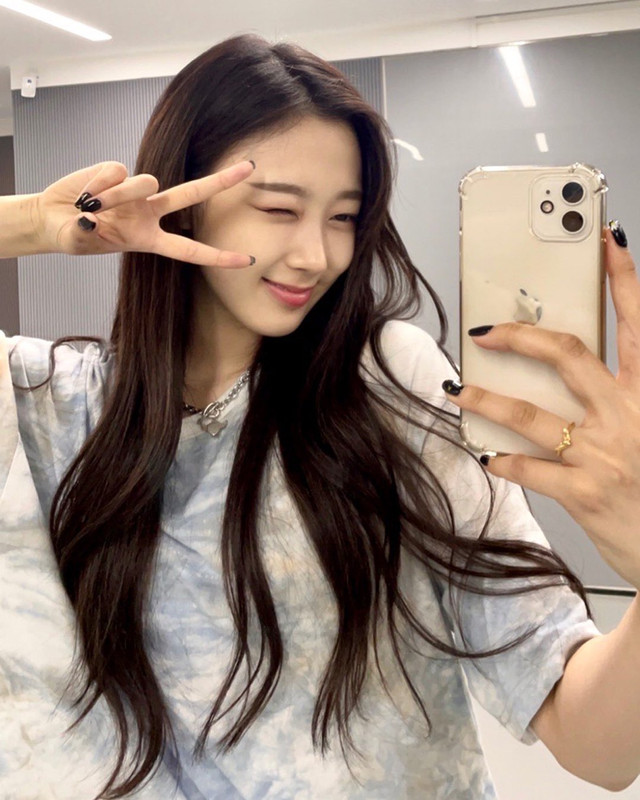
Giselle. Six weeks ago, she had been a storm of frustration and self-doubt, her creative fire smothered under the weight of her own internal censor. She had deleted every verse she wrote, convinced her work was “trash,” destined to be dismissed by a global market that would never understand her. Now, her notebook was filled with completed lyrics—sharp, biting, devastatingly honest. Three full songs in six weeks. One of them, she had written in a single night, the words pouring out of her like a dam finally breached. The velvet choker still encircled her throat, a constant, quiet reminder of the surrender that had unlocked everything. She joked about it now, irreverent and free, her laughter no longer a deflection but a genuine expression of joy.
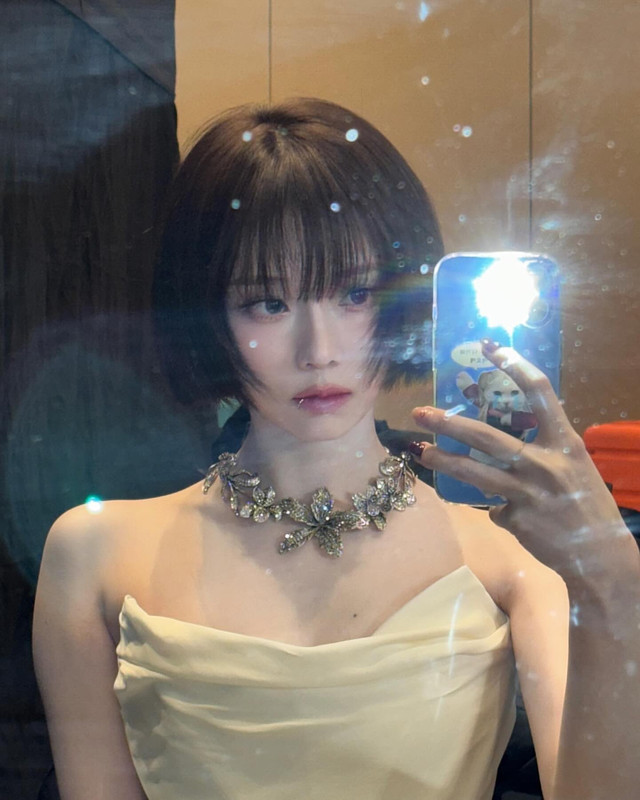
Winter. Six weeks ago, she had been a ghost trapped behind glass, watching herself with the cold, critical eye of a stranger. The internal critic had been a relentless, merciless tyrant, auditing every note, every step, every breath, until she was too exhausted to feel anything at all. Now, the critic was quiet. Not gone—perhaps it would never be fully gone—but manageable. A whisper instead of a scream. She had choreographed an entire B-side track herself, a haunting, intricate piece that had left the choreographer in stunned silence. She no longer watched herself in the mirror during practice. She watched the music. She watched her members. She watched him. And when she smiled—a rare, quiet, genuine thing—it was because she meant it, not because she was performing.

Karina. Six weeks ago, she had been a titan holding up the sky, her shoulders perpetually braced against the weight of leadership. She had poured every ounce of herself into her members, leaving nothing for herself, her own needs buried so deep she had forgotten they existed. She had confessed her kink to him like a sin, as if her desire to serve was something shameful rather than sacred. Now, she still led—she would always lead—but she no longer led alone. She delegated. She rested. She allowed herself to receive without guilt. The Chopard necklace danced at her throat with every movement, a tiny diamond catching the light, a reminder that she was allowed to sparkle, too. She had made love to him last night with a tenderness that still made his chest ache, and afterward, she had whispered, “Thank you for taking care of me.” He had kissed her forehead and told her she deserved it. She had cried, just a little. And she had let him hold her through it.
And him. Julian Kang. The fraud. The con man. The hollow therapist with the purchased credentials and the predatory plan. Six weeks ago, he had been a stranger in a borrowed suit, manipulating his way into their lives with clinical jargon and placebo pills. Now… now he was standing in their living room, watching the sunrise, waiting to face the man who could end everything with a single decision. Somewhere along the way, the performance had stopped being a performance. The mask had become his face. The lies had become truths he was only beginning to understand.
He was in love with them. All of them. Not in the way he had planned—not as conquests or patients or variables in an experiment. As people. As women. As the family he had never known he needed until they had dragged him, kicking and screaming, into their world and refused to let him go.
The CEO meeting was in three hours. Everything could change. Everything could end. But as Karina’s hand slid into his, her fingers interlacing with his own, he realized he was not afraid.
“Ready?” she asked.
“Ready.”
And he was.
* * *
The waiting room outside the CEO’s office was a study in corporate intimidation disguised as comfort. Sleek leather chairs the color of dried blood. Abstract art on the walls that looked like a depressed kaleidoscope had vomited. A floor-to-ceiling window offering a panoramic, indifferent view of Seoul’s glittering skyline, the morning sun streaming in to cast long, accusing rectangles of gold across the polished granite floor. A secretary with a perfect bun and a smile that never reached her eyes pointedly ignored them, the click of her keyboard a metronome marking the passage of dread.
Julian sat in the center of the row of chairs, his tie straight, his posture composed. But his jaw was tight—just slightly, just enough for someone who knew him to notice.
Giselle noticed. She nudged his knee with her own. “You look like you’re about to face a firing squad, Doc. Relax. It’s just the guy who signs your paychecks. What’s the worst he could do? Fire you? Oh, wait.”
“Comforting,” Julian murmured, not taking his eyes off the closed oak door across the room. “Thank you. Truly.”
“Anytime. I’m here to provide emotional support and devastating sarcasm in equal measure.”
Ningning, curled in the chair beside him, was scrolling her phone with a focus that was entirely performative. “There’s a video of a cat riding a Roomba,” she announced, her voice a little too bright, a little too quick. “It’s wearing a tiny helmet. It’s very important. I’m watching it to calm my nerves.”
“Is it working?” Winter asked from the end of the row, her voice dry as bone.
“Not even a little. But the cat is very cute.”
Karina, seated on Julian’s other side, was reviewing notes on her tablet with the calm authority of a general before battle. But her foot, crossed at the ankle, was tapping a slow, nervous rhythm against the air. Julian’s hand found hers, stilling the motion. She glanced at him, a flicker of surprise crossing her features before settling into quiet gratitude. She did not pull away. She did not hide. She simply turned her hand over, interlacing their fingers, her skin warm and steady against his.
“You know,” Giselle said, leaning back in her chair and crossing her long legs, “Six weeks ago, we were all sitting in this exact formation, terrified out of our minds because the Doc had just announced the shadow days. Remember that, Winter? You asked him what his ‘observational framework’ was. With that face. That very serious, very intimidating face.”
Winter’s lips twitched, the ghost of a smile. “A reasonable question. He gave a reasonable answer. And then he proceeded to completely ignore his own framework and do whatever he wanted.”
“Hey,” Julian said mildly, a real smile touching his own lips now. “I was being holistic.”
“You were being horny,” Giselle corrected, not missing a beat.
“Those things aren’t mutually exclusive,” Karina observed, not looking up from her tablet.
Ningning giggled, a genuine, bright, startled sound that cut through the tension like a beam of sunlight. “I liked the shadow days. Except the part where I cried in the recording booth. That was not fun. I don’t recommend that part.”
“But you got ice cream after,” Winter said, and now the warmth in her voice was unmistakable, a soft ember glowing in the dry tinder of her usual tone. “And an ice pack. For your ‘muscle cramp.’”
Ningning’s cheeks flushed a vivid, adorable pink. “That was a very real muscle cramp. From very real, very legitimate activities. Karina-unnie, tell them.”
Karina finally looked up from her tablet, a sly, knowing smile curving her lips. “It was a very real muscle cramp. From very real activities. That I definitely did not witness. While sitting in the dark on the sofa. At two in the morning. Like a completely normal person.”
“You were sitting in the dark like a Bond villain,” Ningning accused, pointing a finger at her leader. “Who does that? Who just sits in the dark, scrolling their phone, waiting to catch their members in compromising situations?”
“A concerned leader,” Karina replied serenely, “monitoring her maknae’s recovery. It’s called due diligence.”
“It’s called being creepy.”
“Semantics.”
The laughter that rippled through the group was light, easy, and tinged with the unspoken awareness that these jokes were a shield. They were talking about the past—the absurdities, the close calls, the moments of chaos—because the past was safe. The past was known. The future was a door they were all afraid to open. No one mentioned the meeting. No one mentioned the possibility of Julian being reassigned. No one mentioned what would happen if this all went wrong. They clung to the familiar, to the ridiculous, to the memory of ice packs and Bond villain jokes, because as long as they were laughing, they didn’t have to face the uncertainty.
Julian listened to them—their teasing, their warmth, their effortless, comfortable intimacy—and felt something settle deep in his chest, a heavy, warm stone of certainty. Whatever happened in that office, this was real. They were real. The way Winter’s eyes crinkled at the corners when she tried not to smile. The way Giselle’s sarcasm was now a blanket she shared, not a wall she hid behind. The way Ningning’s giggles were free and unselfconscious. The way Karina’s hand felt in his—not a secret, but a statement. This was his life now. And no CEO, no board, no corporate machinery could take that away.
The secretary’s phone buzzed, a sharp, insectoid sound. She looked up, her professionally neutral expression somehow becoming even more void of emotion. “CEO Tak Young-jun will see you now.”
The laughter died. The masks slid back into place—not the brittle, terrified masks of six weeks ago, but the composed, professional faces of idols ready to fight for what they believed in.
Karina rose first, smooth and graceful as a queen rising from her throne. The others followed. Julian stood last, straightening his tie, feeling the weight of their collective gaze on him.
“Remember,” Karina said quietly, her voice low and meant only for the five of them in that sterile, sunlit space, “we’re a team. Whatever he says, we face it together. No more secrets. No more hiding.”
“Together,” Ningning echoed, her voice small but steadier now, her chin lifting.
“Together,” Winter agreed, her dark eyes clear and focused, the white gold bracelet on her wrist catching the light.
“Together,” Giselle finished, a fierce, defiant grin flashing across her face, all sharp edges and gleaming resolve. “Let’s go remind the CEO exactly what he’s paying for.”
* * *
Tak Young-jun’s office was a monument to power and perception. Vast, commanding, with panoramic views of Seoul that seemed to stretch into infinity. The desk was a single, massive slab of polished black stone, clean but for a single tablet and a pen holder. The CEO himself was already on his feet, crossing the room to greet them with an enthusiasm that was, by his standards, effusive. He was a man who understood the theater of leadership, and this morning, he was playing the role of the proud, benevolent patriarch.
“Dr. Kang! And Aespa! Please, come in, sit down.” He gestured to the plush, low-slung chairs arrayed before his desk, his smile broad and genuine. “I apologize for the early hour, but I wanted to meet with you all together. The reports I’ve been receiving… extraordinary. Truly extraordinary.”
They settled into their chairs, a united front. Julian took the center, flanked by Karina and Giselle, with Winter and Ningning on the outer edges. The formation was unconscious, instinctive—a living diagram of their new ecosystem.
“I’ll get straight to the point,” the CEO continued, settling back behind his desk and steepling his fingers. The morning sun glinted off his watch. “The performance metrics have been nothing short of remarkable. Vocal stability, dance synchronization, creative output, biometric stress indicators—every single metric has improved beyond our most optimistic projections.” He paused, letting the praise land with the weight it deserved. “The board is impressed. So impressed, in fact, that they’ve made a decision.”
He leaned forward, his dark eyes gleaming with the particular excitement of a businessman about to deliver what he believes is excellent news. “Your comeback has been moved forward. Two months. You’ll be releasing the new album next month. The board believes you’re ready. The production teams have been notified. The marketing department is already preparing materials.”
The silence that followed was not the silence of celebration. It was the silence of shock, so thick it seemed to absorb the sunlight. Ningning’s hand found Julian’s sleeve and gripped it tightly, her knuckles whitening. Giselle’s jaw tightened, a muscle flickering in her cheek. Winter’s expression became very, very still—the stillness of someone processing information she did not like, her body going preternaturally calm. Karina’s professional mask didn’t waver, but her foot began tapping a frantic, silent rhythm under the chair.
“Next month,” Giselle repeated, her voice flat and carefully controlled, each word a stone dropped into still water. “We were supposed to have three months. We have four songs finished. We need at least eight for a full album.”
“I’m aware of the timeline,” the CEO said smoothly, his tone practiced and persuasive. “But the creative output from the past six weeks has been extraordinary. Three songs in a month, Giselle-ssi? That’s unprecedented in your career. At this pace, you’ll have the album finished in no time. And the momentum—the momentum is invaluable. Striking while the iron is hot, as they say.”
“At this pace,” Karina said carefully, her voice measured but carrying an edge of steel that could cut glass, “we risk burning out. The reason our output has been so strong is precisely because we’ve had the space to breathe, to recover. Pushing the timeline forward—”
“Is an opportunity,” the CEO finished, his smile unwavering, a benign wall. “An opportunity to capitalize on your current momentum. The board is very excited. The fans are hungry. And I have every confidence you’ll rise to the challenge.” It was not a discussion. It was a decree, wrapped in velvet.
“Now, Dr. Kang.” The CEO’s attention shifted, his smile becoming something sharper, more calculating. Julian felt the temperature in the room drop by several degrees. “Your work has been extraordinary. The board and I have been discussing how best to… expand your impact within the company.”
Julian’s expression remained neutral, a placid lake, but his hand, resting on the arm of his chair, tightened almost imperceptibly.
“There are other artists under our umbrella who could benefit from your expertise,” the CEO continued, spreading his hands as if presenting a feast. “NCT, for example. Red Velvet. Our new girl group, set to debut next year.” He leaned back, his tone casual but his eyes keen and assessing as a surgeon’s scalpel. “We’d like to offer you a new position—Chief Wellness Director for the entire company. A substantial raise, of course. A larger office. A full staff. You could revolutionize the way we approach idol mental health across the entire industry.”
The silence in the room was sudden, absolute, and deafening. It was the sound of a world tilting on its axis.
Ningning’s grip on Julian’s sleeve tightened to the point of pain. Her voice, when it came, was a sharp, instinctive, completely unplanned protest that burst out of her before she could stop it, raw and terrified. “No! You can’t—he can’t just—we need him! You can’t take him away!”
The CEO’s eyebrows rose sharply. His gaze snapped to Ningning, his expression a mixture of surprise and sudden, sharp scrutiny. The silence stretched, dangerous and calculating. Ningning’s face drained of color as she realized what she had done, the professional veneer shattering to reveal the desperate child beneath. Her hand flew to her mouth, her eyes wide with horror.
Karina’s hand found Ningning’s knee under the chair, a grounding, steadying pressure. Her voice, when she spoke, was smooth as polished glass, flowing into the breach with the practiced ease of a leader who had navigated a thousand crises. “What Ningning means, Sajangnim, is that now is precisely the wrong time to reduce Dr. Kang’s availability to us. The comeback has been moved forward by two months. We are under more pressure now, not less. We need him more than ever. Removing him—even partially—at this critical juncture would be… counterproductive to the very momentum the board wishes to capitalize on.”
“I understand the concern,” the CEO said, his tone placating but his eyes still sharp, filing away Ningning’s outburst for later analysis. “But the proposal doesn’t eliminate his role with you. It simply… broadens it. He can still work with Aespa while overseeing the broader wellness initiative for the company.”
Julian spoke for the first time. His voice was calm, clinical, but carried an undercurrent of quiet, unshakeable authority that stilled the room. “Sajangnim, if I may. When I first met Aespa, they were in crisis. Not the kind of crisis that shows up on performance metrics—the kind that hides behind professional smiles and practiced choreography. They were close to giving up. Winter had not spoken voluntarily in a production meeting in months. Giselle had not completed a single song in half a year. Ningning was dissolving into tears after every rehearsal. And Karina was carrying a burden that would have broken most people.” He paused, letting the words sink into the vast, silent room, making the invisible visible. “The metrics looked better than the reality. They always do. Idols are trained to perform wellness as convincingly as they perform on stage.”
The CEO’s expression was unreadable, but he was listening. Truly listening.
“The reason they have improved,” Julian continued, leaning forward slightly, “is not because I applied a generic therapeutic framework. It’s because I embedded myself in their ecosystem. I learned their individual rhythms, their specific pressures, their unique psychological architectures. I became a part of their daily lives. That level of integration is not scalable. It is not replicable across multiple groups. If you spread me thin, you lose the very thing that made this work. You get a watered-down version of care that may check a box on a corporate responsibility report, but will not prevent another crisis. And you risk losing the progress they’ve made.” He met the CEO’s gaze steadily, man to man, professional to professional. “With respect, Sajangnim, I must decline the offer.”
The CEO was silent for a long moment, recalibrating. Then, with a small, almost imperceptible sigh that spoke of boardroom pressures and quarterly reports, he said, “The board will raise the issue of cost. A full-time psychologist dedicated to a single group is… difficult to justify on paper. It’s not a strong defense, I admit. But I have to answer to people who care primarily about the bottom line.”
“Oh, for god’s sake.”
Giselle snapped, her patience finally, audibly fraying. She leaned forward, her dark eyes blazing with a ferocity that made even the CEO blink. “We generated over forty percent of the company’s revenue last fiscal year. Our tour alone paid for this building. And you’re worried about the cost of one psychologist? One psychologist who is literally the reason we’re not all on indefinite hiatus or worse?”
She was gripping the arms of her chair, her knuckles white. “With respect, Sajangnim, that’s not a financial argument. That’s an excuse. And it’s a bad one.”
The CEO held up a placating hand, his expression shifting to something almost conciliatory. “I understand your frustration. And I’m not unsympathetic. I want to do what’s best for you—all of you. But I need something I can present to the board. Something concrete. Something that justifies this level of investment in a way they can understand.”
Into the tense, charged silence, Winter spoke.
Her voice was quiet at first, almost tentative—the voice of someone stepping forward after a lifetime of holding back. “What if we didn’t hide it?”
Everyone turned to look at her. She was sitting very still, her hands folded in her lap, her dark eyes clear and focused. The white gold bracelet—the star, the feather, the diamond eye—glinted softly on her wrist, catching the morning light.
“What do you mean?” the CEO asked, his brow furrowing.
Winter took a breath. When she spoke again, her voice was steadier, gaining strength with each carefully chosen word. It was not a suggestion. It was a speech—a vision, meticulously constructed, delivered with the quiet, unshakeable conviction of someone who had thought about this for a very long time.
“Our next album is about empowerment. About struggle and survival. About the dark before the dawn. The lyrics, the concepts, the visual direction—everything we’ve been working on is about overcoming something. What if we told the truth about what that ‘something’ was?” She paused, letting the question hang in the air. “Not all of it. Not the intimate details—those are ours, and they stay ours. But the emotional reality. We were struggling. We were close to breaking. SM Entertainment recognized the problem—before it became a scandal, before it became a tragedy—and provided a revolutionary solution. A dedicated performance psychologist. Someone who worked with us, individually and as a group, to bring us back from the edge.”
She leaned forward slightly, her dark eyes fixed on the CEO with an intensity that was almost hypnotic. “K-pop has always been about perfection. About polished surfaces and flawless performances and the illusion that idols are superhuman. But the industry is changing. Fans want authenticity now. They want to know their idols are human. They want stories of struggle and resilience. They want to feel connected to something real.” Her voice was gaining momentum now, a quiet, unstoppable force. “If we control the narrative—if we frame our story as one of recovery, with the company as the institution that provided the solution—we create a buzz that no marketing campaign could match. The album becomes more than music. It becomes a testament. A cultural moment. The conversation around mental health in the industry shifts. And we lead it.”
She paused, her gaze sweeping across her members—Ningning’s wide, shining eyes, Giselle’s fierce, proud smile, Karina’s quiet, approving nod—before returning to the CEO. “The album’s success is guaranteed. Not because of marketing. Because of meaning. And the board can justify Dr. Kang’s position not as a cost, but as the centerpiece of a new SM initiative for artist wellness. The first of its kind in the industry.”
The silence that followed was profound. The CEO was staring at Winter, his expression arrested, his calculating mind visibly racing through the implications, weighing risk against revolutionary reward.
“Winter-ssi,” he said quietly, a slow, wondering smile spreading across his face, “that is a remarkable idea. Genuinely remarkable. It’s bold. It’s risky. It’s exactly the kind of innovation this company needs.” He tapped a finger on his desk, the sound sharp in the quiet room. “A documentary series. Behind-the-scenes footage of the creative process, interviews about the struggle, the recovery… culminating in the comeback. We position it not as a breakdown, but as a breakthrough. A case study in modern artist management.”
Ningning was nodding vigorously, her earlier panic replaced by dawning hope. “I love it. It’s honest. It’s real. Fans will connect with it on a whole different level.”
“I can already see the trailer,” Giselle added, her earlier fury transmuted into creative fire. “Grainy, intimate shots. Voiceovers from each of us. No gloss. Just… truth. Or as close as we can get.”
Karina’s voice was calm, measured, the leader’s seal of approval that carried ultimate weight. “It’s the right strategic move. For us. For the company. For the industry. It turns our vulnerability into our greatest strength.”
The CEO nodded slowly, decisively. The deal was crystallizing in his eyes. “I’ll present this to the board at the next meeting. I expect pushback on the transparency, but the narrative control and potential for brand elevation… it’s compelling.” He turned his gaze back to Julian. “In the meantime… Dr. Kang’s role with Aespa is confirmed through the album release and the first full promotional cycle. Your schedule override authority will be reduced—you won’t need it now that they’re stable and the comeback timeline is formalized. And the company card is being recalled for audit.”
A faint, curious frown crossed his features. “Though I have to admit, your expenses were significantly less than I anticipated. Given the scope of the ‘embedded’ work you described, I expected… substantial discretionary costs. The fund was barely touched. Less than ten percent utilized.”
Julian said nothing. He kept his expression neutral, professional. But a ghost of a smile touched his lips—a private, knowing thing that spoke of nights spent not in expensive restaurants or on billed therapy couches, but on a dormitory sofa. Of care measured not in receipts, but in whispered confessions in the dark, in shared meals cooked in a too-small kitchen, in the priceless, un-billable currency of trust earned slowly and spent completely. Karina caught the fleeting smile, her dark eyes flickering with a deep, understanding curiosity. She filed it away for later, a mystery to be unraveled in the quiet of their own space.
“Then we have an understanding,” Karina said, rising smoothly from her chair, the movement drawing the meeting to its natural close. “Thank you, Sajangnim, for your time and your consideration.”
The CEO rose, a sign of respect, and extended his hand across the vast, polished desk to Julian. “You’ve done exceptional work, Dr. Kang. Truly exceptional. I look forward to seeing the results of this… new chapter.”
Julian took his hand, the grip firm and final. He met the CEO’s gaze with a quiet, steady confidence that no longer felt like a performance. “So do I.”
* * *
The door clicked shut with a final, solid sound—the sound of a world sealing itself away from the outside. The lock engaged with a soft, satisfying thunk. For a moment, they all simply stood there in the muted grey sanctuary of Julian’s office, the ambient lighting soft on their faces, the weight of the meeting still clinging to their shoulders like a second skin.
Then, the professional masks dissolved.
It happened not all at once, but in a series of quiet, unraveling gestures. Karina let out a long, slow breath, her shoulders dropping from their perfect, leaderly square. Winter’s poised stillness melted into a slight, boneless lean against the doorframe. Giselle raked a hand through her hair, messing the perfect styling. Ningning pressed her palms to her flushed cheeks, her eyes wide and shining.
“We did it,” Ningning breathed, the words tinged with a disbelief so profound it vibrated in the air. She took a step into the center of the room, turning in a slow circle as if to confirm the reality of the four walls, the familiar sofa, the credenza with its discreet bottles. “We actually, actually did it. He said yes. He said it was remarkable.” She stopped, facing Winter, her expression one of pure, unadulterated awe. “Winter, you were amazing. You were… a goddess. A quiet, terrifying goddess of corporate strategy.”
A wide, incredulous, slightly hysterical grin spread across Giselle’s face. “We did it,” she confirmed, as if saying it again would make it true. “Winter, that speech—where did that come from? You were like a secret PR genius they had locked in the dungeon. A very elegant, very intimidating secret weapon. You made the CEO say ‘remarkable.’ Twice. I’ve never seen him look at anyone like that. It was the look you give a revolutionary piece of technology you’re about to acquire. He wanted to patent you.”
Winter’s cheeks flushed a faint, pleased pink, but she was smiling—a genuine, unguarded, radiant smile that transformed her sharp, elegant features into something soft and luminous. It was a smile he had seen only in fragments before, never this complete, never this freely given. “I’ve been thinking about it for a while,” she admitted, her voice quiet but clear. “The idea of… not hiding anymore. Of telling a truth, or at least a version of it that doesn’t destroy us. It seemed like the only way to make this—us—sustainable. To protect it.” She looked down at her hands, at the bracelet on her wrist. The star, the feather, the diamond eye. “I just… I wanted to contribute. The way you all have. With your songs. Your leadership. Your… light.” The last word was almost a whisper.
“You contributed,” Karina said, her dark eyes warm with a fierce, maternal pride that made something in Julian’s chest tighten. “More than contributed. You may have just revolutionized the way this entire industry approaches mental health. That wasn’t just a speech. That was a blueprint for the future. You built us a fortress with your words.”
Julian moved then, drawn by the need to do something with the energy crackling in the room. He went to the small credenza beside his desk, retrieving a bottle of deep, ruby-red Barolo and five crystal glasses. The quiet pop of the cork was a punctuation mark. “I believe this calls for a celebration,” he said, his voice a low, steady rumble in the warm quiet. “A proper one.”
The wine glugged richly into the glasses, the sound liquid and promising. He distributed them—a glass into Ningning’s eager hands, another into Winter’s more tentative grasp, a third to Giselle who took it with a reverent nod, a fourth to Karina who accepted it with a slow, knowing smile. He kept the last for himself.

They migrated to the sitting area without discussion, falling into their familiar geography. Ningning curled herself into the corner of the deep sofa, tucking her feet beneath her. Winter perched on the armchair, back straight but her expression soft. Giselle sprawled across the plush rug with a sigh, her back against the sofa, her long legs stretched out. Karina leaned against the edge of Julian’s desk, one ankle crossed over the other, holding her glass up to the light to watch the wine swirl. Julian remained standing among them, the center of their loose constellation, his tie already loosened, the first two buttons of his shirt undone. For the first time that day—for the first time in weeks—his posture was fully, completely relaxed. The atmosphere was thick with a quiet, profound, bone-deep relief, a warmth that had nothing to do with the temperature and everything to do with the fragile, powerful thing they had just preserved.
“Okay,” Giselle said, raising her glass high. The ruby liquid caught the light like a captured gem. “A toast. To Winter, our secret PR genius, who just walked into the CEO’s office and casually revolutionized the industry while the rest of us were still trying to figure out how to say ‘no’ without getting fired.”
“To Winter,” they echoed, their voices blending into a warm chord. Winter’s blush deepened to a shade that nearly matched the wine in her glass, and she took a quick, flustered sip.
“To us,” Ningning added softly, her voice carrying a warmth that belied her years. She looked at each of them, her dark eyes shining. “To all of us. For being brave. For not giving up. For trusting each other even when it was terrifying. For choosing each other.”
“To us,” they repeated, and the words felt like a vow.
“And to the most insane, unethical, absolutely life-saving, completely unconventional therapy in the history of K-pop,” Giselle finished, her grin widening into something wicked and fond. “And to the doctor who somehow, against all odds, made it work. By any means necessary.”
Julian inclined his head, a small, self-deprecating smile touching his lips. “I believe I was merely the catalyst. The hard work was yours. All of it. The courage was always yours.”
“God, he’s humble now,” Giselle muttered, rolling her eyes dramatically before taking a long drink. “Six weeks ago he was torturing me with a vibrator during a photoshoot and calling it ‘creative disinhibition,’ and now he’s humble. Character development. I’m so proud.”
The laughter that followed was easy, cleansing. It was the sound of a tension wire, stretched to its limit for hours, finally being cut.
Then, Karina set down her glass on the desk with a soft, definitive click. The sound drew their attention. Her dark eyes found Julian’s, and in them was a curious, pointed intensity that had been simmering since the meeting. “Speaking of things that don’t add up,” she began, her voice deceptively light. “The CEO mentioned your expenses were lower than expected. Significantly lower.” Her fingers drifted unconsciously to the Chopard necklace at her throat, the dancing diamond catching the soft office light like a wink. “I know for a fact you bought each of us gifts that were… not inexpensive. This necklace alone would have raised questions in any audit. How did you manage that?”
The comfortable mood shifted, deepened. All eyes turned to Julian.
He was quiet for a long moment, swirling the deep red wine in his glass, watching the liquid coat the crystal and slide back down in slow, syrupy legs. The silence was patient, but expectant. Finally, he looked up. “I didn’t use the company card for the gifts.”
The silence that followed was sudden and absolute. It was the silence of a puzzle piece clicking into a place they hadn’t known was empty.
“You didn’t,” Giselle said, sitting up straighter, her brow furrowing in genuine confusion. “But those were expensive. The choker, the anklet, Winter’s bracelet, Karina’s necklace… that must have been… a significant amount. A very significant amount.”
“I used my own money.” He met their eyes, one by one—Giselle’s disbelief, Winter’s quiet surprise, Ningning’s wide-eyed wonder, Karina’s steady, searching gaze that saw too much. “It didn’t feel right,” he continued, his voice dropping into a more intimate register. “Buying you gifts with the company’s budget. It felt… transactional. Like you were a line item on an expense report. A business cost. And you’re not.” He paused, letting the words hang, simple and devastating in their sincerity. “You’ve never been. Not to me. Not even at the beginning.”
The air in the room grew thick, sweet with the weight of the confession.
“You paid for them yourself,” Winter said slowly, as if working through a complex equation. “All of them. Out of your own money.”
“Yes.”
“Julian,” Karina said, her voice quiet but intense, “those were not cheap. The Chopard necklace alone…”
“I’m comfortable,” he interrupted gently, a faint, wry smile touching his lips. “More comfortable than a clinical psychologist’s salary would suggest. I have… other sources of income. Investments. Old savings. Family money, to be brutally honest. It’s not something I talk about. It felt… irrelevant. It still does.”
Giselle was staring at him with a mixture of disbelief and something softer, something approaching awe. “So you’re telling me you’re secretly wealthy, and you spent your own money on us, and you just… never mentioned it? For six weeks? While we were worrying about your job security?”
“It didn’t seem important.”
“Not important,” Giselle repeated, her voice climbing an octave in pure, unadulterated incredulity. “He says it’s not important. The man has been secretly bankrolling our emotional support jewelry and he says it’s not important. I—” She broke off, shaking her head, a helpless, incredulous laugh escaping her lips. “You’re insane. You’re actually insane. I love you.”
The words hung in the air for a heartbeat—bold, unguarded, utterly sincere, and spoken without a trace of her usual defensive irony. Then Ningning was laughing, bright and warm, and Winter was smiling that radiant smile again, and Karina was shaking her head with a fond, exasperated expression that did nothing to hide the glistening in her eyes.
“The gifts weren’t about the money,” Julian said quietly, needing them to understand. He looked at Ningning. “The anklet was about your innocence and your joy—a reminder that you’re allowed to be light, to be playful, to be young, no matter how heavy the world feels.” His gaze shifted to Giselle. “The choker was about your surrender to your own creativity—a reminder that letting go of control can unlock everything beautiful inside you.” He turned to Winter. “The bracelet was about seeing yourself through kinder eyes—the star for the stage you can finally enjoy, the feather for the lightness you’re learning to carry, the eye for the gaze you’ve reclaimed from your own internal critic.” Finally, he looked at Karina, and his voice dropped to a near-whisper, for her alone. “And your necklace… that was about learning to sparkle for yourself. Not for the cameras. Not for the fans. Not for your members. For you. Because you deserve to dance in the light. You deserve to be free.”
Karina’s hand was pressed against the pendant at her throat, the tiny diamond shifting and sparkling beneath her fingers like a captured heartbeat. Her dark eyes were glistening, but her voice was steady, grounded in the reality he had just outlined. “You couldn’t put any of that on an expense report.”
“No,” Julian agreed, a soft, final sound. “I couldn’t. It would have… diminished it. Made it something corporate. Something less than it was. And it was everything.”
The conversation drifted after that, carried on the warm current of relief and shared purpose. They talked about the album—the songs that were finished, the concepts that were taking shape, the press release Winter would help draft. They talked about schedules, about choreography, about the strange, thrilling terror of being truly seen. The mood was celebratory but focused, grounded. They had been given a chance, not a guarantee. The real work was just beginning. And for the first time, they were talking about the future—not avoiding it, not dancing around it with jokes and deflections, but actively, eagerly planning it. A future with him in it. A future they were building, brick by careful brick, together.
* * *
Karina set down her glass with a decisive, resonant click.
The room quieted, attuned to her frequency. Her dark eyes found Julian’s, and there was something in them now—something serious and hopeful and quietly, fiercely determined. It was the look she got before a difficult choreography sequence, the look of a leader who has made a decision and is prepared to see it through.
“We’ve been talking,” she said, her voice clear and carrying. “All of us. Behind your back, actually. Extensive discussions. Late nights after you’ve gone home. Lots of wine.” A faint, tender smile touched her lips, acknowledging the conspiracy. “And we’ve come to a decision. Together.”
Julian’s brow furrowed slightly, his gaze flickering across their faces—Ningning’s shining, hopeful eyes; Giselle’s unusually serious expression, all trace of humor gone; Winter’s steady, certain gaze; and finally, Karina’s quiet, commanding presence. A thread of unease, thin and cold, slipped down his spine. “About what?”
“About you. About us. About what this is.” Karina paused, her voice steady and sure, carrying the full, resonant weight of her leadership, of their collective will. “We want you to stay. Not as our doctor. Not as our therapist. Not as a temporary solution to a temporary problem.” She rose from the desk and crossed the room to where he stood. The space between them vanished. Her hand came up, cool and sure, to cup his jaw. Her thumb stroked the sharp line of his cheekbone with a tenderness that belied the firmness of her words. “We want you to be ours. Officially. Permanently. Whatever that means. Whatever we decide it means, together. As five.”
“We talked about it a lot,” Ningning added softly, uncurling from the sofa to stand. Her voice carried a quiet, earnest warmth that wrapped around the declaration. “We didn’t want to spring it on you. We wanted to be absolutely sure. All of us. Together. It wasn’t a quick decision. It was the only decision.”
“It’s not a sudden impulse,” Winter said from her chair, her voice quiet but firm, an anchor in the emotional tide. “We’ve discussed every angle. The risks, the complications, the practicalities, the scandal, the future. We’ve talked about what it would mean for our careers, for our dynamic, for our lives. And we’ve all come to the same conclusion. Independently. And together.”
“We want this,” Giselle finished, pushing herself up from the floor. Her voice was uncharacteristically earnest, stripped of its usual deflective humor, raw and plain. “We want you. Not just the therapy. Not just the sex—though, let’s be real, that’s obviously a world-class perk. You. All of you. The messy parts, the quiet parts, the parts that are still figuring it out. Whatever you’re willing to give us. Whatever you want this to be. We’re asking you to stay. For real. No more contracts. No more sessions. Just… us.”
Julian stared at them—at Karina, standing before him, the diamond at her throat winking with her pulse, her dark eyes steady and sure, offering him a world; at Ningning, her small face etched with fierce, unwavering trust; at Giselle, fierce and vulnerable and utterly, beautifully earnest; at Winter, quiet and steady and certain, her bracelet a silent testament to the journey that had led them here.
They were offering him everything. A family. A home. A love so vast and complicated and profound it stole the breath from his lungs.
And he knew, with a clarity that was both terrifying and absolute, that he could not accept it while standing on a lie.
So instead of answering, he closed his eyes.
A long, shuddering breath was drawn into his lungs, a breath that seemed to originate from the very depths of his being, scraping past the ghost of every falsehood he’d ever told. When his eyes opened again, there was something new in them—something raw and terrified and utterly, completely unguarded. The final mask, the one he’d worn even for himself, was gone. All of it. Every last layer of performance, of persona, of carefully constructed identity, sloughed away like dead skin.
“Before I can answer that,” he said, his voice rough and quiet, sandpaper on silk, “there’s something I need to tell you. All of you. Something I should have told you a long time ago.”
The shift in his tone was a physical change in the room. The warm, celebratory air grew still and cold, charged with the gravity of a coming storm. The hope in their eyes flickered, not fading, but sharpening into attention.
Karina’s hand fell from his jaw, but she did not step back. Her proximity was now an interrogation, a support, a promise all at once. “What is it?”
“The truth.” He took another breath, a ragged thing, and then the words began to come—slowly at first, each one a stone he had to lift from the riverbed of his soul, then faster, a torrential confession that had been building for weeks, for months, for a lifetime of being someone he was not. “My credentials. My degrees. My entire career as a psychologist. It’s… not what I led you to believe. It’s not what I led anyone to believe.”
He forced himself to meet their eyes, to not flinch from what he would see there. “The degrees are real. The certificates are real. They would pass any background check—they did pass SM’s background check. But the way I obtained them…” He shook his head slowly, a gesture of profound, weary shame. “I didn’t earn them. Not really. I paid people to write my essays. I paid someone to take my licensing exams. I paid actors to pose as my clinical references. I learned the language of psychology fluently—I can speak it in my sleep, quote the DSM, reference the studies—but I never internalized a single ethical principle. I never trained. I never truly studied. I never became what I claimed to be.”
The silence in the room was the heaviest thing he had ever felt. It was a physical pressure, a weight of waiting. Four pairs of dark eyes were fixed on him, unblinking, their expressions unreadable landscapes of shock and dawning comprehension.
“When I applied for this position,” he continued, the words now coming in a desperate, unstoppable rush, “I didn’t do it because I wanted to help you. I didn’t even know what kind of condition you were in. I saw a job posting for a ‘Chief Performance Wellness Director’ at SM Entertainment, and I thought… what an interesting challenge. What an incredible opportunity to prove a point. What a way to prove to myself that I could fool the biggest, most scrutinizing entertainment company in Korea. That was it. That was my entire motivation. Arrogance. Ego. A… a game.”
He swallowed, his throat tight. “The methods I used with you—the ‘somatic recalibration,’ the ‘cognitive reframing through sensory overload,’ the ‘neural precursors to creative flow’—none of it was real therapy. It wasn’t based on anything. It was just… what I thought might work. What I guessed might help. I was making it up as I went along. Every session. Every intervention. Every single thing I told you about your conditions, your treatments, your neurological pathways to progress—it was all improvised. A performance. I had no idea what I was doing. I was a man in a lab coat playing with live wires.”
His voice cracked, a fissure in the dam of his composure, but he forced himself to continue, to empty the poison completely. “By the time I understood how serious your situations were—how deeply Winter was suffering, how Giselle’s creativity was strangling her, how Ningning’s light was being extinguished, how you, Karina, were carrying a burden that would have shattered granite—it was too late. I was already in too deep. I couldn’t tell you the truth. I couldn’t walk away. So I just… kept going. Kept pretending. Kept trying to be the person you needed me to be, hoping that my instincts would be enough to keep you from falling apart. And I fell in love with you while doing it. Which made the lie so much worse.”
He fell silent. The torrent was spent. He stood before them, exposed and hollowed out, waiting for the verdict. The room was utterly, completely still. The silence stretched for three heartbeats. Four. Five. An eternity of suspended judgment.
Then Winter spoke.
“Who cares?”
The words were so quiet, so casual, so utterly, devastatingly unexpected that Julian blinked, certain the tension had snapped his auditory processing. He stared at her. “What?”
Winter was sitting very still in her armchair, her hands folded neatly in her lap, her dark eyes clear and steady as a mountain lake. The white gold bracelet glinted on her wrist as she lifted her hand in a small, dismissive gesture that encompassed his entire confession. “Who cares about your certificates? Who cares about your degrees? Who cares how you got them?” She tilted her head, her gaze analytical but warm—the same gaze that had cataloged every detail of their shared journey, every micro-expression, every unspoken fear. “You said yourself the treatment worked. Maybe better than any legitimate, by-the-book psychologist’s would have. You saw us. You understood us in a way no one else did. You helped us. Not because a textbook or a theory told you how, but because you paid attention. Because you cared. Those are the things that matter. Not pieces of paper from a university. Not credentials. Results. And the result is that we’re here. We’re whole. We’re together.”
Julian stared at her, his mouth slightly open, utterly speechless. The foundation of his shame, the bedrock of his fraud, was being dismantled not with anger, but with a calm, irrefutable logic that left him breathless.
Ningning was already nodding, her dark eyes shining with a fierce, protective warmth that seemed too vast for her small frame. “Winter-unnie is right. I don’t care about any of that. You could have a degree from a cereal box and it wouldn’t change a single thing that matters.” She was crossing the room toward him, each step decisive. “When I was sobbing on the floor of that recording booth, when I felt like the most worthless, talentless person in the world, you didn’t quote a therapy manual. You held me. You got down on the floor with me. You told me my voice was a gift, and that my worth wasn’t tied to a perfect take. You told me I was enough. Not because you were following some protocol. Because you meant it. I felt you mean it. That’s what matters. That’s the only thing that’s ever mattered.”
Giselle was laughing—a low, incredulous, slightly unhinged sound of pure wonder. “Wait, wait, wait. Let me get this straight.” She was pointing at Julian, her finger punctuating the air, her dark eyes wide with a mixture of disbelief and something that looked very much like fierce admiration. “You’re telling me you completely faked your way into being SM Entertainment’s top performance psychologist, with fake references and fake essays and fake everything, and then you just… improvised the most effective, life-saving therapy any of us have ever had? You just winged it? For weeks? While pretending to be a legitimate professional and somehow not giving us all nervous breakdowns?” She shook her head slowly, a grin of pure, dawning awe spreading across her face. “That’s not a confession. That’s a flex. That’s the most insane, audacious, genuinely impressive thing I’ve ever heard in my life. I think I’m actually more attracted to you now. Is that weird?”
“Giselle!” Karina said, a warning note in her voice—but she was smiling. A slow, incredulous, deeply tender smile that transformed her entire face.
“What? I’m being honest! Wasn’t that the whole point of this? No more secrets?” Giselle turned back to Julian, her expression softening into something earnest and raw. “Look. Doc. Or Julian. Or whatever you want us to call you. You lied. Okay. You faked your credentials. Fine. But you also saved us. You saved me. You unlocked something in me that I thought was dead and buried forever. And you did it by being exactly who you are—not some textbook psychologist, not some clinical robot following a script, but you. A man who saw four broken women and decided, ‘I’m going to fix this, and I don’t care what the rules say, I’ll make up my own.’” She spread her hands, a gesture of surrender and acceptance. “How could I be angry at that? How could any of us? You fought for us with the only tools you had. Yourself.”
Karina stepped forward then, closing the last inch of space between them. Her hand came up to cup Julian’s jaw once more, her thumb stroking his cheekbone with the same devastating tenderness as before. Nothing had changed. Everything had changed, and yet nothing of consequence had shifted at all. “You came here,” she began, her voice a low, resonant murmur meant only for him, but heard by all in the silent room, “as a stranger with a briefcase full of placebo pills and a head full of borrowed jargon. You were supposed to be a predator. A con man. A hollow fraud walking through our lives without leaving a trace.” She paused, her dark eyes holding his, seeing straight through the last of his defenses to the trembling core beneath. “But somewhere along the way, you stopped pretending. You stopped being any of those things. You became exactly what we needed. What I needed. And then… you became something more. Something real. Something ours.”
“I lied to you,” Julian whispered, the words a broken thing, his eyes swimming with the threat of tears he would not shed. “From the very first second.”
“You did,” Karina agreed without hesitation, her voice still soft, still sure. “And then you told us the truth. Not because you had to. Not because you were caught. Because you wanted to. Because you respected us—loved us—enough to risk losing everything. You handed us the knife and showed us where to cut.” She leaned in, her forehead resting against his, her breath warm on his lips. “That’s not the act of a con man, Julian. That’s the act of someone who loves us. Truly. And we love you. All of you. Even the parts that are messy. Even the parts that were fake. Especially the parts that are real.”
“So,” Giselle said, raising her now-empty glass with a crooked, irreverent, utterly loving grin, “are you going to say yes to us, or do we have to keep arguing about how monumentally little we care about your fake degree?”
Julian looked at them—at Karina, her forehead pressed to his, her breath mingling with his, her hand a steady anchor on his face; at Ningning, who had taken his hand, her small fingers interlacing with his own in a grip that was surprisingly strong; at Winter, quiet and steady and utterly certain, a calm, accepting smile on her lips; at Giselle, fierce and irreverent and full of a grace he had never deserved. The family he had stumbled into through a door of lies. The love he had never expected, had never dared hope for. The home he had never known he was searching for until he was already inside, warmed by its light.
The fraud was dead. The con man was gone. All that was left was the truth of his own heart, beating a frantic, hopeful rhythm against his ribs.
“Yes,” he said, the word a rough, broken, utterly sincere whisper that seemed to come from the very center of his being. “Yes. I’m yours. All of you. Whatever that means. Whatever comes next. However we have to fight for it. I’m yours. I have been for a long time.”
The room did not erupt in chaos. It dissolved into a quiet, joyful, tearful convergence. Ningning let out a soft, happy cry and threw her arms around his waist, her face buried against his chest, her shoulders shaking with relieved sobs. Giselle whooped, a sound of pure triumph, and stumbled forward to wrap her arms around both him and Ningning, her laughter bright and clear. Winter rose from her chair and joined them, her embrace slower, more deliberate, but no less fierce, her cheek resting against his shoulder. And Karina leaned in, through the tangle of their arms, and pressed a deep, slow, lingering kiss to his lips—a kiss that tasted of red wine and salt tears and a future, finally, fearlessly claimed.
“Good,” Karina murmured against his mouth, her voice a low, satisfied purr that vibrated through his very bones, her dark eyes glistening with unshed tears of happiness. “Because we weren’t going to take no for an answer. You’re stuck with us now, Doctor. Or whatever your real name is.”
“Julian,” he said quietly, the name feeling more real on his tongue than it ever had before. “My real name is Julian Kang. That part, at least, was always true.”
“Julian,” Karina repeated, as if testing the weight of it, tasting the truth of it. She smiled, a beautiful, radiant, unguarded thing. “Welcome to the family. Officially.”
* * *
The wine was finished. The tears were dried—happy tears, cleansing tears, the salt of old pain washed away by a tide of relief. The confessions had been made and accepted, the lies had been burned away in the crucible of their shared gaze, and what remained was something stronger, something truer, something that could not be shaken by corporate meetings or public scrutiny or the uncertain, rolling tides of the future.
They gathered their things in a comfortable, familiar silence punctuated by soft laughs and lingering touches. A sweater was handed to Ningning. Giselle’s discarded heels were retrieved. Winter carefully placed the empty wine glasses on the credenza. Karina smoothed Julian’s collar, her fingers lingering. The door to the office—the fortress of muted greys that had become a sanctuary, a confessional, a home—was opened, and they stepped out together into the quiet, carpeted hallway, leaving the soft light behind.
As they walked toward the elevator bank, the endless glitter of Seoul’s night skyline stretching beyond the floor-to-ceiling windows like a galaxy laid at their feet, Julian felt a hand slide into his. Karina’s, her fingers cool and sure. Another hand found his other side—Ningning’s, small and warm. Giselle was walking ahead, turned backwards, still talking animatedly about album concepts, her velvet choker a dark, elegant line against the pale column of her throat. Winter walked beside her, quiet and content, the charms on her bracelet catching the hallway lights with every step, tiny beacons in the dim.
The elevator doors slid open with a soft ding, revealing a mirrored box. They stepped inside together, their reflections multiplying into infinity—a constellation of selves, past and present, fractured and whole. Julian looked at the four women surrounding him in the glass—their beautiful, familiar faces, their smiles both tired and incandescent, their quiet, fierce, impossible love encircling him completely—and understood, with a final, settling peace, that he was exactly where he was supposed to be.
The fraud was dead. The con man was gone. The hollow man was filled. What remained was simply a man—flawed, fearful, profoundly lucky—who had been transformed by a love he did not earn but would spend the rest of his life deserving. Not the easy, comfortable love of convenience, but the hard, messy, glorious, all-consuming love of being truly seen, known in your darkest corners, and chosen anyway.
The elevator descended smoothly, silently.
The doors opened onto the cool, concrete vastness of the underground parking garage. The air smelled of dust and gasoline and possibility. The future was waiting, unknown, uncharted, bright with both promise and peril.
And together, hand in hand, without a single backward glance, they walked into it.
The End.
10 likes from PinkBlood, SadMango, DCH, InsomniaSpaceShin, YujinnieWinter, Beaupitul, SwiftPenguin, nkip34, xana, and iMARKurmom.